
Trial By Fire
An Essay by Katerina McGrath
Ignacio Riley's is a compelling story, if known only to those lost
deep in the arcana of Australian experimental-music history.
I, like many others, owe my own discovery of Riley to this very
publication's now-defunct online forums, specifically the rhetorical
posting of his artistic manifesto1 in a thread derailed by the toxic
discourse these forums were known for2.
Purportedly written in 1908, and published in the short-lived Perth literary
journal West and Beyond in 1961, the manifesto was, to me at least, a strikingly
beautiful document; one unlike any artistic manifesto I'd ever read. In fact,
despite its grandiose title, it doesn't read like a manifesto at all until its
shocking coda, combining instead both an elegy for a lost homeland with a travel
memoir in which the author makes an oblique claim to a musical practice that not
only predates, but directly inspires that of the Italian futurists. Exciting stuff,
unless you believe that the entire document is apocryphal, which many do. It's a
conclusion that was in some ways understandable as, besides the manifesto, there
are scant historiographical references to the man, let alone a biographical study
of his life and times3,
and in written studies of experimental music he is almost entirely absent
4. However, with deeper analysis,
and techniques sensitive to the historiography of colonised people, the support for
Riley's existence becomes so compelling I believe it is almost undeniable. The racist
undertones of the continuing doubts I've encountered online - likewise those in the
rejection of his purported amusicality5
- have motivated me to spend the last three years compiling the evidence of Riley's
life for a post-graduate thesis which I believe will elevate Riley to his rightful
place as one of the forebears of western avant-garde arts.
The story of Ignacio Riley, as revealed in his manifesto, is thus: born sometime in
the early 1880s to a "woman who was immediately punished for the act,6"
Riley was an orphan raised at the New Norcia Mission. He studied music and theology, his
"palpable gifts" in these pursuits excluding him from many of the manual labours demanded
of all mission children,7 eventually
earning him entry into the Benedictine order against the prevailing trend of relinquished
rights for the Noongar inhabitants of New Norcia after the death of its foundational abbot
Rosendo Salvado8. Riley's monastic
studies saw him voyage to Rome; this experience, his first outside New Norcia, marking
the first instances of racism he had experienced in his life to that point in time.
Welcomed with indifference by Vatican officials, and denied the concert recitals - and
audience with the pope - that he believed he'd been promised, he "absconded9"
after after a period long enough to learn Italian, with his subsequent months spent wandering
in Rome almost cut short when, unable to secure the recital he believes he deserved,
he is threatened by a theatre crowd for his public excoriation of their perceived rejection of him.
Expecting to die, he is saved through the single-handed intervention of a young,
pre-fame, Filippo Marinetti, who subsequently invites Riley to join him at his apartment
for an impromptu soiree in Riley's honour, where his perceived exoticism soon inspires
the party to partake in an alcohol-influenced
joyride of Rome reminiscent of Marinetti's as-yet-unwritten futurist manifesto; this
one ending not with a car crash but with the abandonment of a drunkenly comatose Riley
and his arrest by the carabinieri not long after their vehicular buzzing of the papal
apartments. After he is deported, Riley finds only ridicule and ostracism in response
to the anti-music he and Marinetti had postulated, and finding himself
unwelcome at New Norcia - or perhaps unwilling to return - he writes a manifesto
advocating a musical rebirth through fire before he seemingly disappears
amidst a spate of arson attacks targeting pianos in the Perth area.10
Much of the Riley manifesto aligns with historical fact. The Yeud children of New Norcia,
in addition to manual arts, were instructed in music11 and
theology.12 Public Public performance
was an integral part of daily life, from the children to Salvado himself.13
It was less common for Yeud children to be initiated into the Benedictine order but
again this was not unprecedented.14
Riley himself15 acknowledges
that his acceptance was against the prevailing leadership strategy of Salvado's successor
Fulgentius Torres, whose insular attitudes16
generally aligned with those of the post-Risorgimento Vatican,17
who very likely saw no benefit in a gifted Yeud acolyte, which, despite explaining Riley's
indifferent reception by ecclesiastic authorities in Rome, doesn't exactly support the
veracity of his claims of church-sponsored travel, making this part of the manifesto perhaps
the most difficult to defend. Otherwise, his details of Roman life are historically accurate.
The base of the Tarpeian Belvedere was a known campsite of Romani people18,
identified by Riley in his manifesto as "Orientals.19"
The majority of the working-class population of Rome was illiterate, meaning a living, albeit tenuous,
could be made as scribe20 as Riley had claimed. Filippo Marinetti
was known to frequent the concert halls of Rome, where he maintained an apartment,21
and, of most significance, met with a man he would later identify as a "Negro Australiano.22"
Of subsequent Australian events, a spate of arson attacks targeting pianos is also
contemporaneously documented 23 24 25,
although no culprit was ever publicly identified; most ignoring the allegation - based on
circumstantial evidence - found in the oral history of former mission resident Augustin
Binghel.26
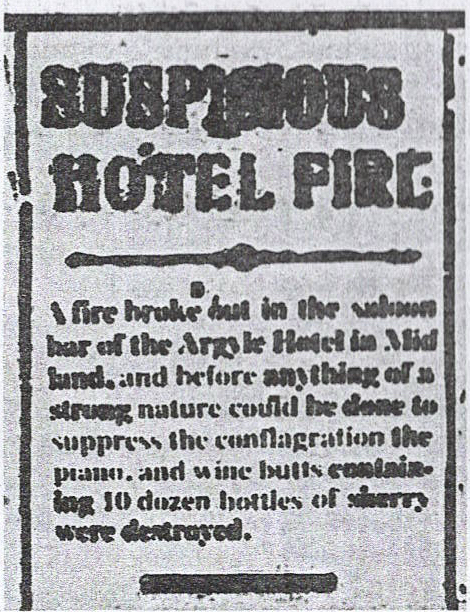
The Evening Mail, 30 Aug 1908.
It is the lack of identification, in any primary document, that skeptics frequently raise
when expressing their doubts about the veracity of the Riley manifesto. Oral histories aside,
the name Ignacio Riley is conspicuously absent from the record, especially in regards to
documentation in which it should presumably be found, such as any census taken of the New
Norcia mission in the years Riley purportedly resided there. Furthermore, the name is absent
from any contemporaneous correspondence I was able to find.
In regards to the census-taking practices used for orphaned or 'orphaned27'
Yued children in Riley's time, such absences are not unusual; the Latinisation of Yued names
further obfuscating identification, a problem immediately apparent when so-called official
documentation is compared to the contemporaneous correspondence of the residents. Riley's
absence from any such correspondence however, is more difficult to reconcile. One reason
for this absence is the
possibility that the name Ignacio Riley
is instead a nom de plume28
adopted for the purposes of the manifesto, a hypothesis that I am not the first to argue.
It is hinted in the literal definition of Ignacio itself
- the Galician form of Ignatius - fiery aptly describing the character of Riley as depicted
in the manifesto while also alluding to the rebirth through fire that the manifesto is
advocating.
Previous examinations of the documents contained in both the New Norcia archives
and those of the Western Australian Department of Aborigines have failed to identify a New
Norcia resident whose biographical details align with the Riley depicted in the manifesto however, seemingly
weakening the nom-de-plume hypothesis. There is no indication that a Yued man was ever
seriously considered Salvado's successor as the abbot;29
neither was there any suggestion of there being a musical and theological prodigy30
at the mission. However, my study has differed in that it does not presuppose that the manifesto
is entirely composed of facts that can can be independently verified, assuming instead
that it contains what I would call the "author's truth;" that Riley has written about
events as he himself has believed them to have occurred,
even it that differs from how his contemporaries have remembered them.
It is through this prism -
searching the records for a gifted-yet-undistinguished man with an inflated sense of
their own standing within the mission - that I have made made a breakthrough in threading
the enigmatic Ignacio Riley with a man whose historiographic existence is undeniable,
and that man's name is Victor Tui. I had almost overlooked him at first; his inclusion
in the 1904 census31 of New Norcia
only registering because I recognised Tui as the name of the town in which Rosendo Salvado
was born. Identified as an "aborigine" in a census that carefully distinguishes between this
ethnicity and those considered "half-caste,32"
Tui is conspicuously one of only two adult employees of the mission at a time when Noongars were strongly
encouraged to find outside employment.33
Missing from both the census of 189334 and that
of 1899,35
during which times he was still a child, I was surprised to find the next instances of his
name in a succession of letters36 37
to the press protesting the mission's withdrawal of support for Noongar landownership. Given he was employed by the mission at this time - employment
that was presumably tenuous38 -
his participation in this campaign appears injudicious; arguably committed by a person with a
deep grudge against the missiondespite his place within it.
Letters between his co-signatories indeed attest that they believed that Riley had joined their campaign
with "his own designs39" and could not be
"entirely trusted.40"
In their response to this campaign, the monks reveal nothing explicit regarding Tui's motives,
but references to "Rosendo's weakness know[ing] more than he realises,41"
and a "strategy of comfort" becoming "too risky,42"
were earth-shattering discoveries. Here was a man, seemingly hidden from the world until adulthood;
spared "from the toil of farm labours.43"
But hidden from who? And for what reasons? The possibility that Tui was the illegitimate son of
Salvado, together with my subsequent discovery of Tui's name on an incoming passenger list44
which confirmed that he had indeed traveled to Europe, were enough to convince my university to fund my own European
sojourn to further the investigation. In the resultant thesis, I was unable to prove categorically
that Tui is the son of Rosendo Salvado as the university had hoped, as beyond a mention of Tui having "the skin of the father45"
in a letter written by a member of propaganda, I could find no references to the issue of Tui's
parentage - understandable given the Vatican's reputation46
for concealing clerical breaches of celibacy - but this is besides the point, which is the
treasure trove of documentation I found in the Vatican archives confirming that Victor Tui was indeed the man who
would later become Ignacio Riley. I found evidence of Tui's stay at the Vatican, his clash with
the Pope, and his arrest and subsequent deportation from Italy, all events depicted in Riley's manifesto.
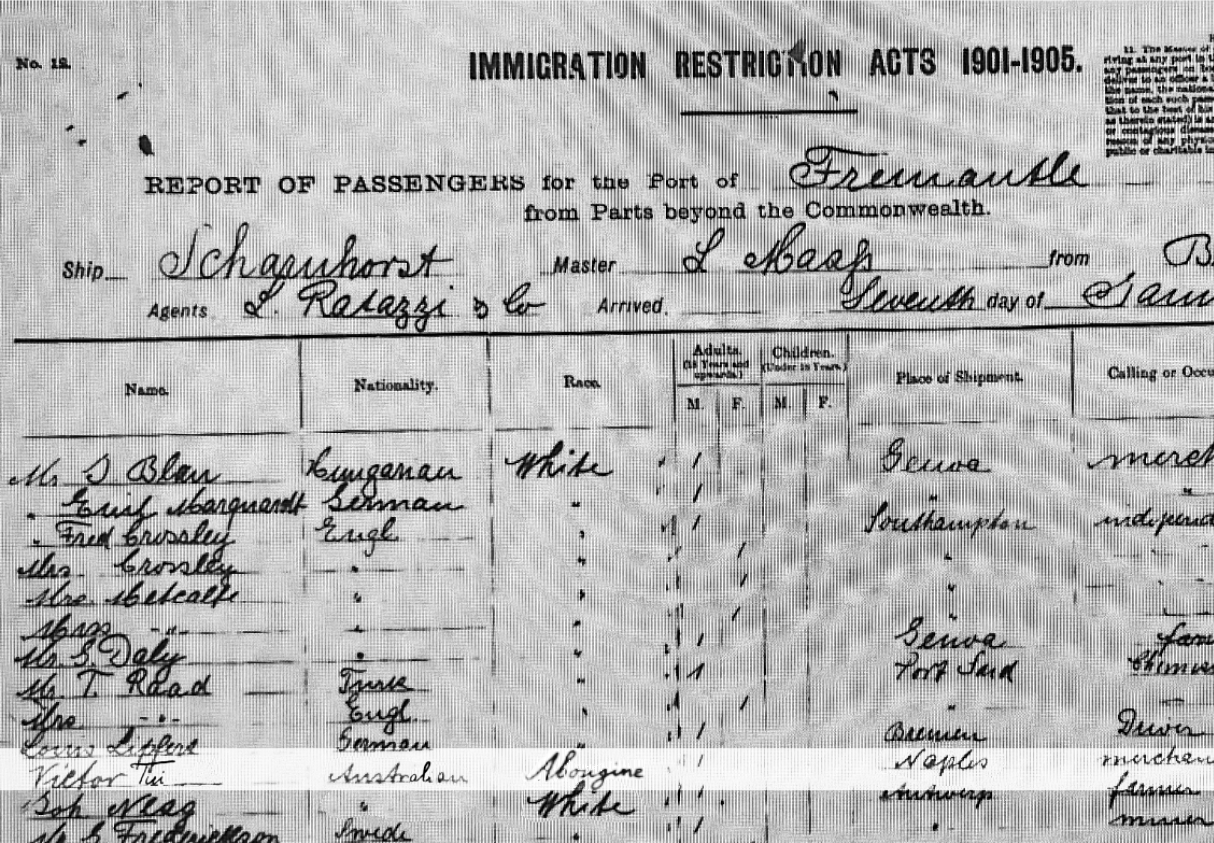
Detail of Fremantle Port incoming passenger list. 7 Jan 1907.
My disappointment with The University of Adelaide's preoccupation with the more salacious aspects
of my research aside, I am grateful for their support, which enabled me to access the information
essential to complete my work. None of this would have been possible without their generous time and
funding, which allowed me to spend the months in Rome, Perth, and at Yale
University that I required. I feel that much of the opposition I have encountered has stemmed from the professional
jealousy these trips have elicited in my colleagues during this age of prevailing academic austerity,
but I had no idea that something as ultimately inconsequential as this would reveal the deeper racism
I'd always assumed was pervading much of Australian academia. Personally, I could have done without
the speaker blasting My Boomerang Won't Come Back hidden within the vicinity of my lodgings, nor the
steaming cups of piss left in the swingline of my office door. Popularly-held wisdom suggests that
ignoring such anonymous cowardice was the best policy but this only seemed to strengthen the
self-righteous indignity my attackers felt in response to my apparent pretentiousness. As a result, I no
longer use any form of social media and I have had to take steps through the court to bar any
form of contact from these gronks but I was still forced to change lodgings on multiple occasions.
In light of this, the same wisdom again would argue that it would be better to practice conflict
avoidance but feeling that this tact was a mistake from the beginning, and perhaps emboldened by
the disciplinary findings of a plurality of universities involved in this sordid affair, I am willing
to name Mack Partridge and Fabian Riches, both formerly of the University of Adelaide, Jason Fernando
of Monash University, and Daniel Tamburovich, formerly of the University of Western Australia, as,
without question, the main perpetrators of the pernicious stunts targeting me and my research.
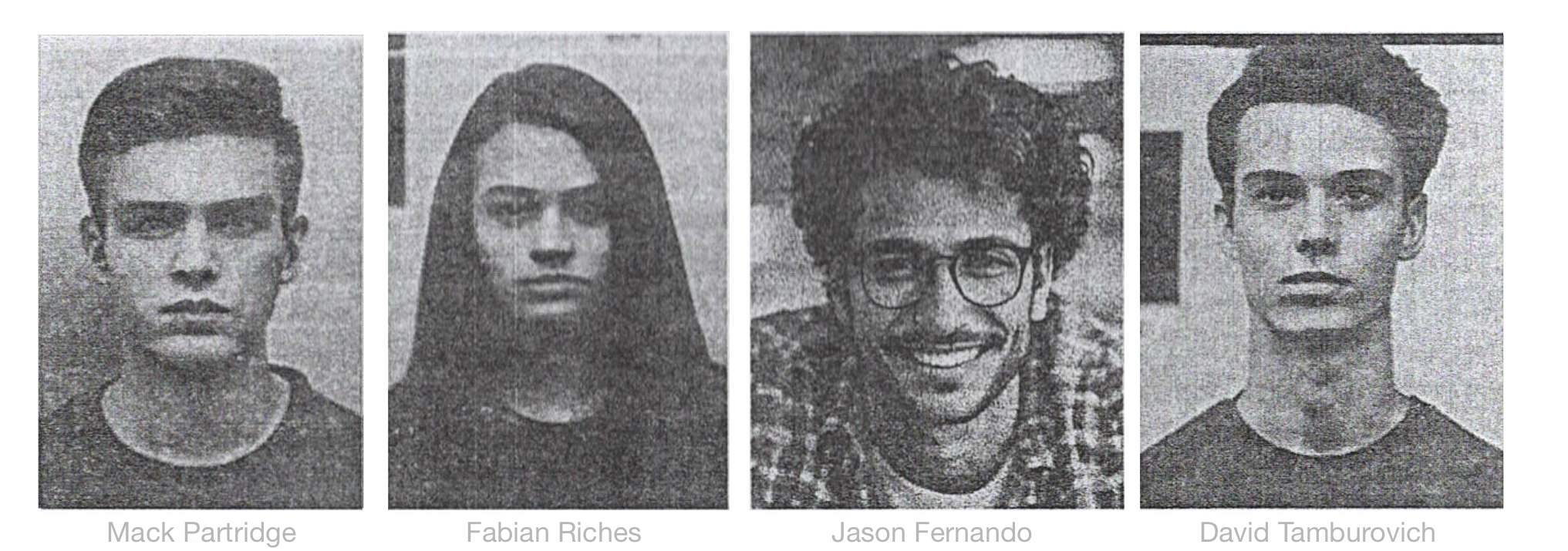
Partridge and Riches were the ones subjecting myself and my neighbours to that loathsome
music and the piss cups, whilst the four of them in concert utilised online communications in
innumerable ways in their attempts to silence me. But they have failed. Using the investigative
skills that, with all due modesty, somewhat justify the funding of my research, I am certain
that all four are acting under the aegis of a well-respected academic who I am only refusing
to name at this time under legal advice that assures me I would be severely punished in defamation
proceedings without the authoritative support of the university's disciplinary tribunal. So I will wait.
But not for long. Because only the truth, purifying like fire, will rid academia of this dead wood that
is holding the rest of us back.
***
Notes.1.^ Riley I. The Manifesto of the Piromani. West and Beyond. 1961 1(2):36-7
2.^ The New Hesperia Forums existed from 2010 until 2019 when it was shut, unable to comply with court-mandated administrative changes stemming from multiple cases of forum-hosted online abuse reaching the courts. I myself was a begrudging user, as it was the only online community for the lower-case and echoraum music scenes before pre-Musk Twitter. As bad as Twitter has become, it has not yet hit the depths reached by the NHF.
3.^ Extensive research - including my own - has failed to find a reference to an Ignacio Riley in any contemporaneous document, although the name can be found in numerous oral histories of Yeud Noongar that I have catalogued in my soon-to-be-published Ph.D. Later in this essay I will provide evidence that strongly suggests that Ignacio Riley is a nom de plume adopted by a person whose existence can be historically confirmed.
4.^ In my own reading of experimental-music literature I have found only two references to Riley (Hiller LA Isaacson LM. Experimental Music. New York: McGraw-Hill; 1959.; Finch A. Early Iconoclasts: The Development and Acceptance of Amusical Techniques. Minneapolis: University of Minnesota Press; 1991.); both posit doubts about his existence.
5.^ The irony of this statement should not be lost. There are many examples of the exclusion of non-white musical practices from the 'high arts' but to exclude Riley's non-musical practice - apocryphal or not - from what the exclusionists term 'true experimentation' is patently absurd.
6.^ Riley. op.cit. p.36
7.^ For a summary of the literature documenting New Norcia mission life see: Haebich A. For Their Own Good. Nedlands (Western Australia):
University of
Western Australia Press; 1988.
8.^ ibid.
9.^ Riley. op.cit. p.36
10.^ Riley's disappearance is not documented in the manifesto itself but in a postscript added presumably for its West and Beyond publication.
11.^ Haebich A. Dancing in Shadows. Nedlands (Western Australia): University of Western Australia Press; 2018.
12.^ Haebich. 1989. op.cit.
13.^ The Inquirer (Perth). 1846 May 27
14.^ For the story of John Dirimera and Francis Conaci, the two Yued boys initiated into the Benedictine Order, see Russo G. Lord Abbot of the Wilderness: the life and times of Bishop Salvado. Melbourne: Polding Press; 1980
15.^ Riley. op.cit.
16.^ Haebich. 1989. op.cit.
17.^ Pope Pius X maintained the Prigioniero nel Vaticano position of his predecessors, his pontificate characterised by an obstinate refusal to negotiate with any secular authority, famously keeping shut all windows in the Vatican that faced Italy (see: Chadwick O. A History of the Popes, 1830–1914. Oxford: Clarendon Press; 1998.)
18.^ Bosworth RJB. Whispering City: Rome and Its Histories. New Haven (CT): Yale University Press; 2011.
19.^ Riley. op.cit. p.37
20.^ Bosworth, op.cit.
21.^ Marinetti FT. Fiume giallo. 1916. Located at: Beinecke Rare Book and Manuscript Library, New Haven (CT); Marinetti, F. T., 1876-1944; Series IV: Writings by Filippo Tommaso Marinetti; Diaries and Notebooks by FTM; Box:44, Folder:1753.
22.^ This meeting is mentioned with frustrating brevity in a letter exalting the inherent avant-gardism of the "negro" and their influence on Futurism, Marinetti demonstrating his characteristically shallow understanding of African peoples in this instance by equating their culture to that of the Yued Noongar. (See Marinetti FT. Letter to: Gaston de Pawlowski. 1932 Aug 12. Located at: Beinecke Rare Book and Manuscript Library, New Haven (CT); Marinetti, F. T., 1876-1944; Series I: Letters by Filippo Tommaso Marinetti, 1909-1944; Box: 1, Folder: 5)
23.^ Perth Cafe On Fire. Kalgoorlie Western Argus. 9 Jun 1908. p31
24.^ Fire Near Mandurah. Day Dawn Chronicle. 11 Jan 1908. p2
25.^ Suspicious Hotel Fire. The Evening Mail. 30 Aug 1908. p2
26.^ Bass RN. Yued and Whadjuk Noongar Man; descendent of Augustin Binghel - former resident of New Norcia. Personal communication with Katerina McGrath 19 Jan 2022.
27.^ Salvado himself was suspected of falsifying census data to obtain additional government funding; see Haebich. op.cit.
28.^ I take no credit for this hypothesis; it is one I first saw suggested on the NHF.
29.^ Salvado may have had this in mind when he encouraged Dirimera and Conaci to accompany him to Rome, but it is believed the idea was never again considered after their tragic deaths. (see Russo. op.cit.)
30.^ It was a Yued named Paul Piromano who was generally considered to be the most talented musician in the mission; he was the official musical director until the programme was disbanded by Torres. Nothing I have found suggests that Piromano is the author of the manifesto.
31.^ Aborigines and Half-Caste Natives of New Norcia. 15 Jul 1904. New Norcia Benedictine Mission: Records, New Norcia
32.^ For modern generations in particular, the term half-caste is highly offensive for its dangerous implications during the Stolen Generations, amongst other reasons (see. Mellor D, Haebich A, editors. Many voices : reflections on experiences of Indigenous child separation. Canberra : National Library of Australia, 2002).
33.^ Haebich. 1989. op.cit.
34.^ The New Norcia Mission, Western Australia. Jan 1893. British Parliamentary Papers: Colonies, Australia. 34:453-460
35.^ Aborigines and Half-Caste Natives of New Norcia. 25 Aug 1899. New Norcia Benedictine Mission: Records, New Norcia
36.^ The Daily News. 3 Feb 1904. p9
37.^ Morning Herald. 12 Mar 1904. p19
38.^ see Haebich. 1989. op.cit for a summary of Noongar employment circa 1904.
39.^ Humphries C. Letter to George Shaw. 30 Mar 1904. Provided to the author.
40.^ ibid.
41.^ Torres F. Letter to Lesmes Lopez. 9 Dec 1906. New Norcia Benedictine Mission Archive: Letters (Section L 1901-1913)
42.^ ibid.
43.^ Riley. op.cit. p.36
44.^ Passenger arrivals in Western Australia, 1898-1925. Western Australian Genealogical Society. 2001
45.^ Arcaro G. Letter to Elio De Filippis .14 Sep 1907. Archivio Storico di Propaganda Fide.
46.^ Horowitz J Povoledo E. Vatican's Secret Rules for Catholic Priests Who Have Children. The New York Times. 18 Feb 2019. www.nytimes.com/2019/02/18/world/europe/priests-children-vatican-rules-celibacy.html